
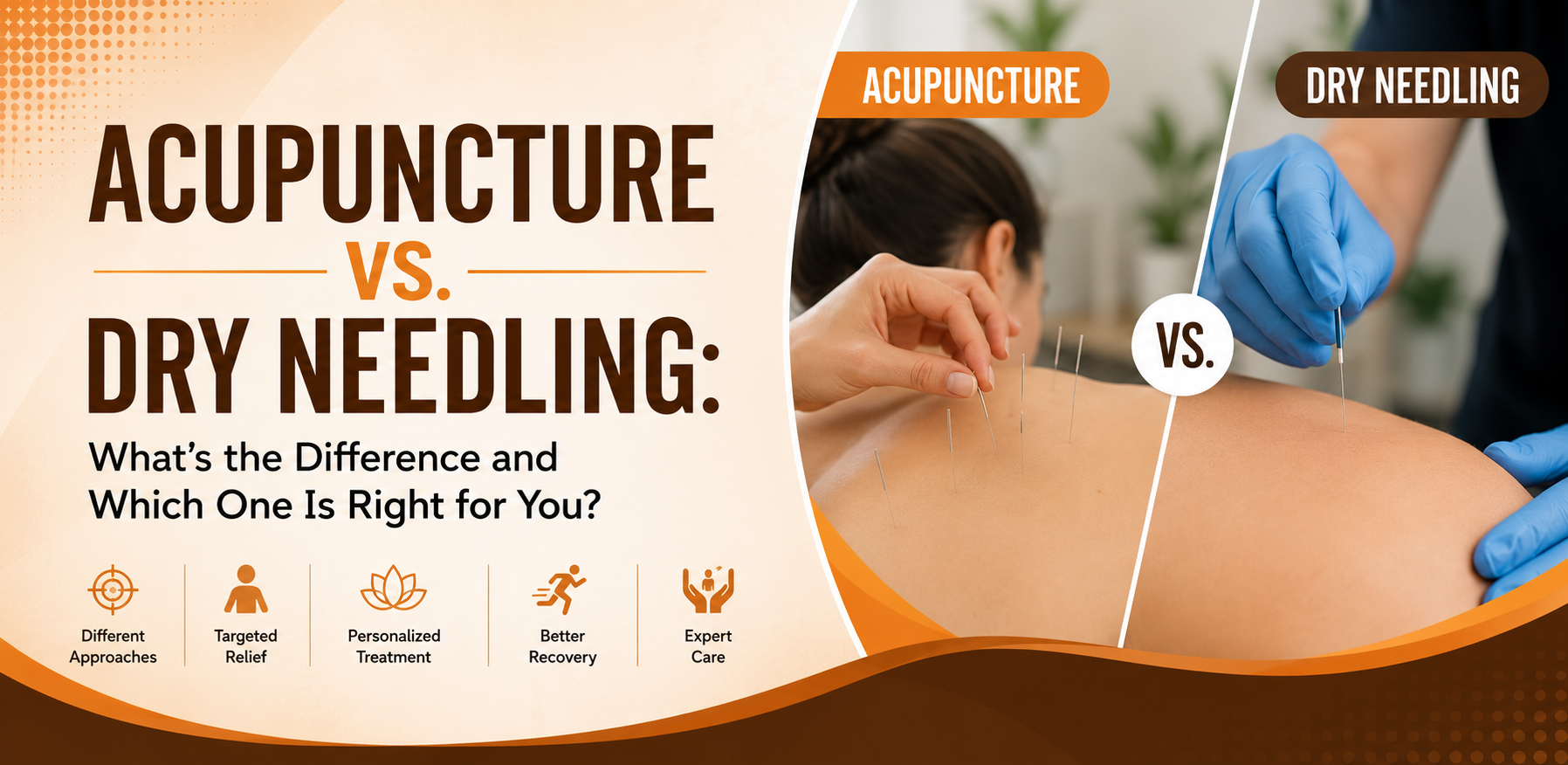
Acupuncture vs. Dry Needling: What’s the Difference and Which One Is Right for You?
If you have searched for pain relief, you have probably come across acupuncture and dry needling. At first glance, they can look almost identical because both use very thin needles. But they are not simply two names for the same treatment.
Understanding the difference between acupuncture vs. dry needling can help you have a better conversation with your physiotherapist and choose an approach that fits your symptoms and recovery goals.
Are Acupuncture and Dry Needling the Same?
No. Acupuncture and dry needling use similar needles, but their treatment approaches, assessment methods and goals can be different.
Acupuncture has roots in Traditional Chinese Medicine and uses specific acupuncture points as part of a broader treatment approach. Dry needling is commonly used within musculoskeletal physiotherapy and focuses on areas such as tight muscles, trigger points and movement-related pain.
The right option depends on your condition, symptoms and overall treatment plan.
What Is Acupuncture?
Acupuncture involves inserting very fine, sterile needles into selected points of the body. At Well-Being Physio & Rehab, acupuncture is offered as part of care for conditions such as chronic pain, muscle pain, back pain, neck pain and sports-related injuries.
Some patients seek acupuncture for pain relief, while others may include it alongside physiotherapy, exercise or other rehabilitation techniques.
What Can Acupuncture Help With?
Depending on the individual’s assessment and treatment goals, acupuncture may be considered as part of a plan for:
- Chronic or recurring pain
- Back and neck pain
- Muscle tension
- Sports-related injuries
- Headaches and migraines
- Joint and muscle discomfort
Your physiotherapist can determine whether acupuncture is appropriate for your particular condition.
What Is Dry Needling?
Dry needling is a technique commonly used in musculoskeletal physiotherapy to address painful or tight areas of muscle and movement dysfunction.
A thin needle is inserted into or around targeted muscle tissue, often including myofascial trigger points. The goal is to help reduce pain and muscle tension and improve movement as part of a broader rehabilitation program.
Dry needling is generally not a stand-alone replacement for rehabilitation. It may be combined with exercises, mobility work, strengthening and other physiotherapy techniques.
Acupuncture vs. Dry Needling: Key Differences
| Acupuncture | Dry Needling |
|---|---|
| Rooted in Traditional Chinese Medicine | Based primarily on modern musculoskeletal and anatomical principles |
| Uses specific acupuncture points | Often targets muscles, trigger points and painful tissues |
| May be used for a broader range of health concerns | Primarily focuses on musculoskeletal pain and movement problems |
| Treatment approach depends on the acupuncture assessment | Treatment is guided by physiotherapy assessment and movement findings |
| Can be incorporated into an overall wellness or pain-management plan | Commonly integrated into physiotherapy rehabilitation |
Although the techniques differ, both involve needles and should only be performed by appropriately trained and authorized healthcare professionals.
Which Treatment Is Right for You?
There is no single treatment that is best for everyone.
If your main concern is persistent muscle tightness, trigger points, restricted movement or a sports-related muscle problem, your physiotherapist may consider dry needling as part of your rehabilitation.
If you are looking for acupuncture for pain management or have a condition where acupuncture may be appropriate, your physiotherapist can discuss whether it fits your treatment goals.
In many cases, needling is most useful when combined with active rehabilitation rather than used as the only treatment.
Can Acupuncture or Dry Needling Be Combined With Physiotherapy?
Yes. One of the biggest advantages of receiving treatment from a physiotherapy clinic is that needling can be considered within a broader rehabilitation plan.
Your treatment may also include:
- Therapeutic exercises
- Strength and mobility training
- Manual therapy
- Stretching
- Postural education
- Movement retraining
- Injury-prevention strategies
The goal is not simply to reduce pain temporarily. A comprehensive approach aims to improve movement, restore function and help you return to the activities that matter to you.
What Should You Expect During Treatment?
Before treatment, your physiotherapist should assess your symptoms, medical history, movement and treatment goals. This helps determine whether acupuncture or dry needling is appropriate.
The needles used are very fine, and sensations can vary between individuals. Some people feel little during insertion, while others may notice pressure, a brief twitch or mild soreness afterward.
Your physiotherapist should explain the procedure, expected sensations and any relevant precautions before treatment.
Acupuncture and Dry Needling in Ajax
If you are searching for acupuncture in Ajax, dry needling near you, or physiotherapy-based pain relief in Ajax, choosing the right treatment starts with understanding the cause of your symptoms.
At Well-Being Physio & Rehab, acupuncture and dry needling are offered alongside physiotherapy services for patients dealing with pain, muscle tension, sports injuries and other musculoskeletal concerns.
Whether you are an athlete recovering from an injury, an older adult managing joint or muscle pain, or someone dealing with persistent back or neck discomfort, a personalized assessment can help determine the most appropriate treatment approach.
Ready to Find the Right Treatment for Your Pain?
You don’t have to guess whether acupuncture or dry needling is right for you. A professional assessment can help identify your specific needs and create a treatment plan around your recovery goals.
Visit Our Location
100 Westney Rd S, #D13, Ajax, ON L1S 7H3, Canada
Give Us a Call
+1 (647) 860-4465
Connect Instantly
WhatsApp: +1 (647) 860-4465
Call Us
+1 (905) 428-7777
Send Us a Message
info@wellbeingphysioandrehab.com
Book your assessment today and discover whether acupuncture, dry needling, physiotherapy, or a combination of treatments may be right for you.