Book Appointment
Whatsapp now
Tight Pelvic Floor & Pelvic Pain Physiotherapy Ajax | Well-Being Physio

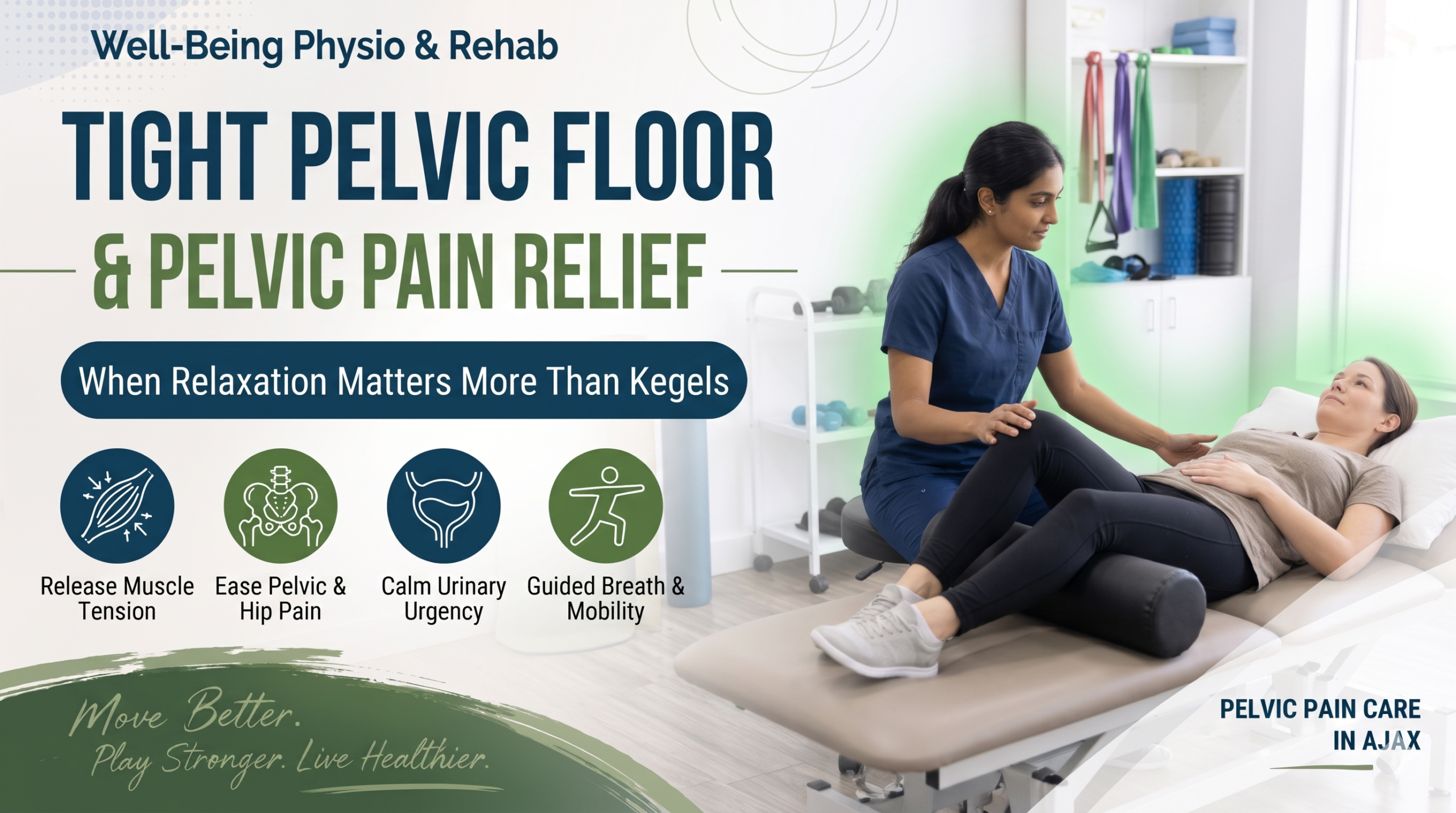
Tight Pelvic Floor & Pelvic Pain Relief in Ajax: Why Relaxation Matters More Than Kegels

Celebrating 1 Year in Ajax: Free 10-Minute New Patient Consultation

We are celebrating our 1-year anniversary serving Ajax, Pickering, and Whitby with a Free 10-Minute Consultation for New Patients.

Location: Well-Being Physio & Rehab, 100 Westney Rd S, #D13, Ajax, ON
Call or WhatsApp to Reserve: +1 (647) 860-4465

When people hear “pelvic floor dysfunction,” they usually picture weak muscles that need strengthening. Yet in clinical practice across Ajax, Pickering, and Durham Region, many patients—both women and men—actually struggle with the exact opposite problem: a hypertonic, or overly tight, pelvic floor.

Just like chronic neck or shoulder tension from desk work or stress, pelvic muscles can get stuck in a protective guarding pattern. At Well-Being Physio & Rehab, led by Registered Physiotherapist Bhumi Shah, our Pelvic Floor Physiotherapy program helps patients identify whether their muscles need releasing rather than squeezing—and guides them safely back to pain-free movement.
Read More

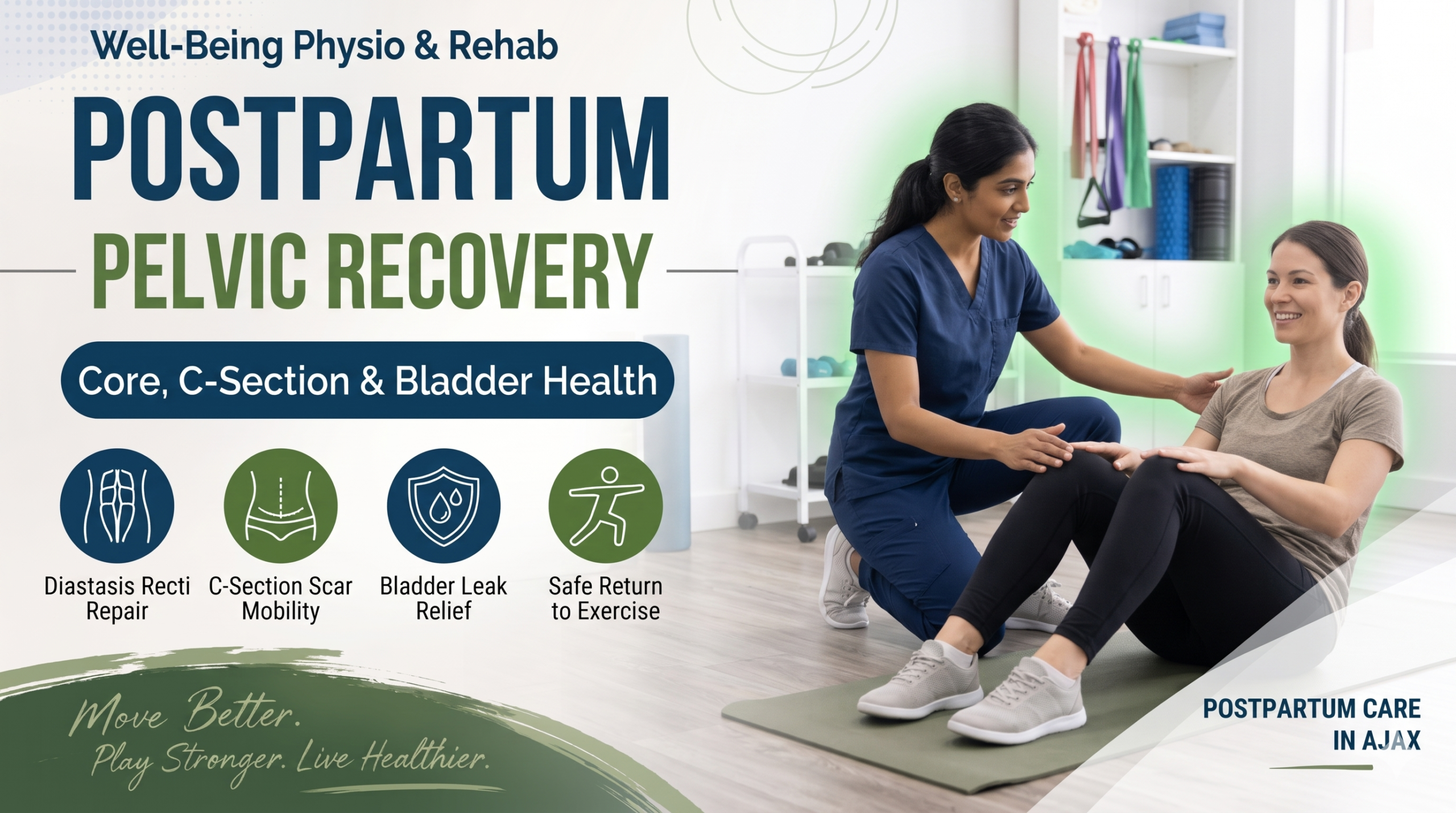
Registered physiotherapist guiding a new mother through postpartum core and pelvic floor recovery exercises at Well-Being Physio & Rehab in Ajax

Postpartum Pelvic Floor Physiotherapy in Ajax: Healing Diastasis Recti, C-Section Scars & Bladder Leaks

Celebrating 1 Year in Ajax: Free 10-Minute New Patient Consultation

We are celebrating our 1-year anniversary serving families across Ajax and Durham Region with a Free 10-Minute Consultation for New Patients through November 30.

Location: Well-Being Physio & Rehab, 100 Westney Rd S, #D13, Ajax, ON
Call or WhatsApp to Reserve: +1 (647) 860-4465

In Canada, most new mothers receive a standard 6-week medical checkup that clears them to “resume normal activity”—yet rarely checks how their deep core or pelvic floor actually healed. Across Ajax, Pickering, and Whitby, many women are left wondering why their lower belly still feels unstable, why sneezing causes bladder leaks, or when it is truly safe to return to running or lifting.

At Well-Being Physio & Rehab, led by Registered Physiotherapist Bhumi Shah, we bridge that gap. Following up on the early signs you may need pelvic floor physiotherapy, this guide walks through how targeted postpartum rehabilitation restores your core and confidence—whether you delivered six weeks ago or ten years ago.


How Pregnancy and Delivery Affect Your Core & Pelvic Floor

During pregnancy, nine months of growing weight and hormonal changes stretch both your abdominal wall and your pelvic floor sling. Whether you had a vaginal birth or a Caesarean section, your deep core system experiences significant mechanical stress:

  • Vaginal Birth: Pelvic floor muscles stretch up to three times their resting length, which can leave them temporarily weakened, bruised, or over-guarded.
  • C-Section Delivery: While the pelvic floor avoids direct tearing, surgical incisions cut through abdominal fascia, often causing scar adhesions, core disconnection, and compensatory pelvic tightness.

Read More

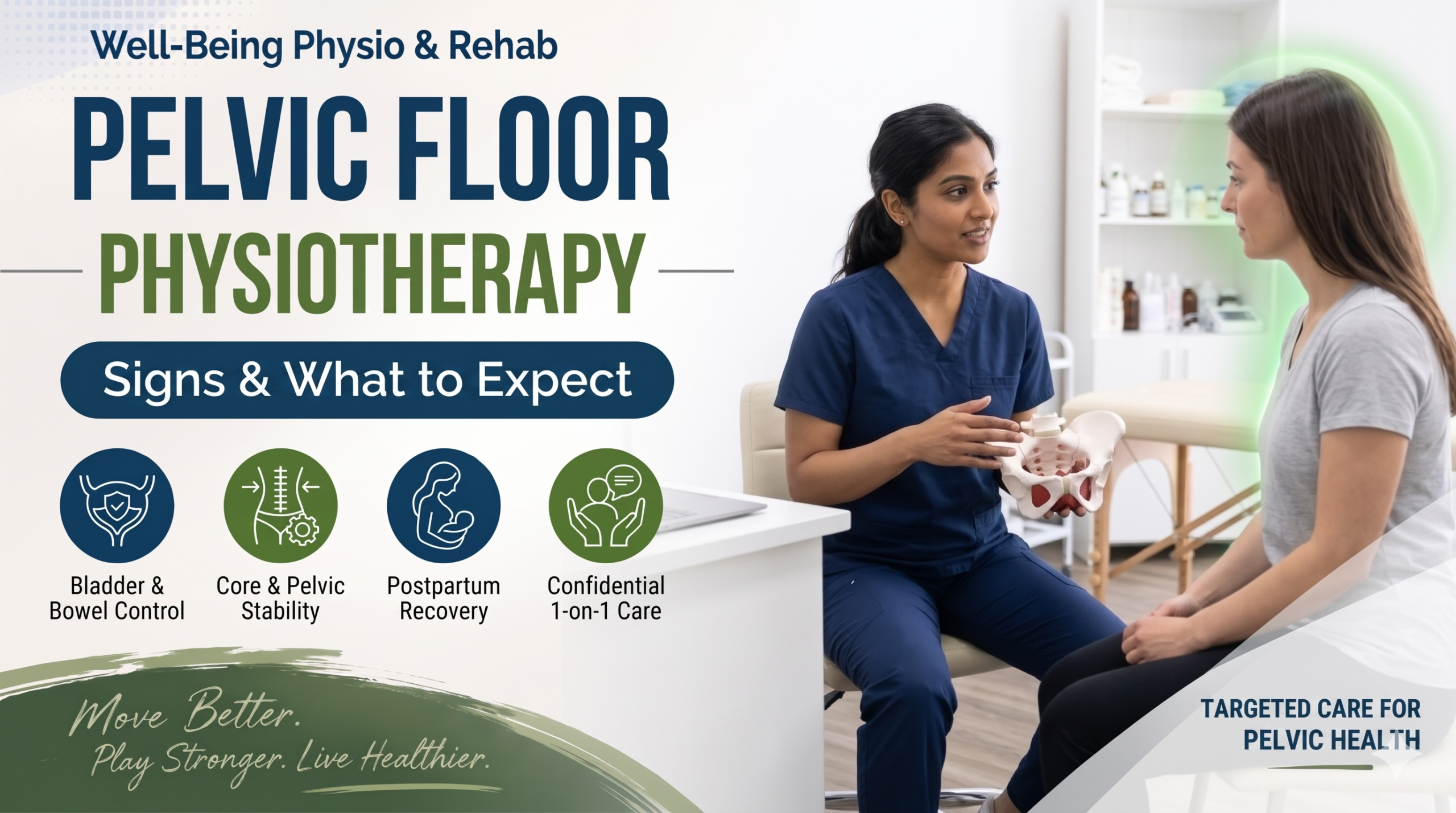
Well-Being Physio & Rehab Pelvic Floor Physiotherapy: Signs & What to Expect in Ajax

Pelvic Floor Physiotherapy in Ajax: Signs You Need It and What to Expect at Your First Visit

Celebrating 1 Year in Ajax: Free 10-Minute New Patient Consultation

We are proud to mark our 1-year anniversary serving the Ajax community at our clinic! To celebrate this milestone and give back to our community, we are offering a Free 10-Minute Consultation for New Patients throughout the month of November.

If you are unsure whether pelvic floor physiotherapy is right for your symptoms, come speak directly with our experienced team in a supportive, confidential setting—with no obligation and no doctor’s referral needed.

Location: Well-Being Physio & Rehab, 100 Westney Rd S, #D13, Ajax, ON
Valid: November 1 – November 30
Call or WhatsApp to Reserve: +1 (647) 860-4465

Many residents across Ajax, Pickering, Whitby, and the Durham Region assume that pelvic floor dysfunction—issues like bladder leakage, pelvic pain, or core weakness—is simply an unavoidable consequence of aging or childbirth.

At Well-Being Physio & Rehab, we want you to know that while these symptoms are common, they are not normal, and they are treatable.

Whether you are a new mother navigating postpartum recovery, an active adult dealing with core instability, or someone experiencing chronic pelvic discomfort, specialized Pelvic Floor Physiotherapy can restore your strength, comfort, and confidence.

Read on to discover the key signs that your pelvic floor needs attention and what to expect during a confidential first assessment at our Ajax clinic.


What Is the Pelvic Floor and Why Does It Matter?

Your pelvic floor is a supportive, hammock-like network of muscles, ligaments, and connective tissues stretching from your pubic bone at the front to your tailbone at the back, and between both sitting bones.

Rather than working in isolation, these muscles coordinate continuously with your diaphragm, deep abdominal muscles, and lower spine to perform four essential functions:

  • Organ Support: They support your bladder, bowel, and uterus against gravity and daily intra-abdominal pressure.
  • Bladder & Bowel Control: They maintain urinary and bowel continence when you cough, sneeze, laugh, lift, or exercise.
  • Core & Spinal Stability: They stabilize your pelvis and lower back during walking, lifting, and athletic movement.
  • Sexual Health & Circulation: They support healthy blood flow and comfortable sexual function.

When these muscles become too weak (hypotonic) or too tight and overactive (hypertonic), everyday activities can trigger uncomfortable symptoms.

Read More

[trustindex no-registration=google]