
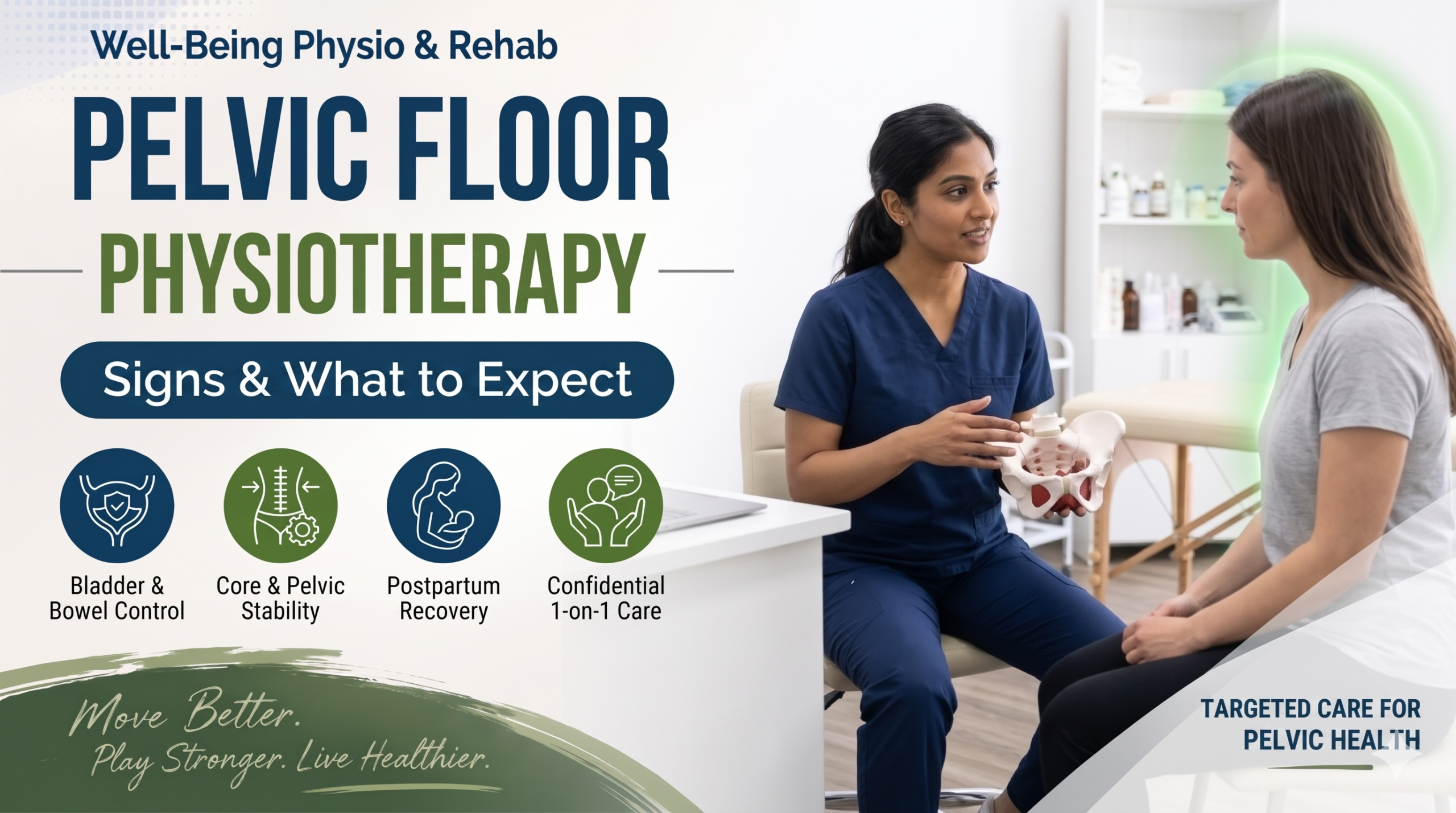
Pelvic Floor Physiotherapy in Ajax: Signs You Need It and What to Expect at Your First Visit
Quick Answer: Pelvic floor physiotherapy is an evidence-based, specialized branch of physical therapy that evaluates and rehabilitates the muscles, ligaments, and connective tissues supporting your bladder, bowel, and uterus or prostate. At Well-Being Physio & Rehab in Ajax, Ontario, registered pelvic health physiotherapists treat bladder leaks, pelvic pain, postpartum abdominal separation, and core instability using personalized neuromuscular retraining, breathing coordination, and gentle manual therapy—without surgery or medication. No doctor’s referral is required to book an appointment in Ontario.
Celebrating 1 Year in Ajax: Free 10-Minute New Patient Consultation
We are proud to mark our 1-year anniversary serving the Ajax community at our clinic! To celebrate this milestone and give back to our community, we are offering a Free 10-Minute Consultation for New Patients throughout the month of November.
If you are unsure whether pelvic floor physiotherapy is right for your symptoms, come speak directly with our experienced team in a supportive, confidential setting—with no obligation and no doctor’s referral needed.
Location: Well-Being Physio & Rehab, 100 Westney Rd S, #D13, Ajax, ON
Valid: November 1 – November 30
Call or WhatsApp to Reserve: +1 (647) 860-4465
Many residents across Ajax, Pickering, Whitby, and the Durham Region assume that pelvic floor dysfunction—issues like bladder leakage, pelvic pain, or core weakness—is simply an unavoidable consequence of aging or childbirth.
At Well-Being Physio & Rehab, we want you to know that while these symptoms are common, they are not normal, and they are treatable.
Whether you are a new mother navigating postpartum recovery, an active adult dealing with core instability, or someone experiencing chronic pelvic discomfort, specialized Pelvic Floor Physiotherapy can restore your strength, comfort, and confidence.
Read on to discover the key signs that your pelvic floor needs attention and what to expect during a confidential first assessment at our Ajax clinic.
What Is the Pelvic Floor and Why Does It Matter?
Your pelvic floor is a supportive, hammock-like network of muscles, ligaments, and connective tissues stretching from your pubic bone at the front to your tailbone at the back, and between both sitting bones.
Rather than working in isolation, these muscles coordinate continuously with your diaphragm, deep abdominal muscles, and lower spine to perform four essential functions:
- Organ Support: They support your bladder, bowel, and uterus against gravity and daily intra-abdominal pressure.
- Bladder & Bowel Control: They maintain urinary and bowel continence when you cough, sneeze, laugh, lift, or exercise.
- Core & Spinal Stability: They stabilize your pelvis and lower back during walking, lifting, and athletic movement.
- Sexual Health & Circulation: They support healthy blood flow and comfortable sexual function.
When these muscles become too weak (hypotonic) or too tight and overactive (hypertonic), everyday activities can trigger uncomfortable symptoms.
7 Common Signs You Could Benefit from Pelvic Floor Physiotherapy
You should consider booking a pelvic health consultation or assessment if you experience any of the following symptoms:
- Urinary Incontinence: Leaking urine when you sneeze, cough, laugh, jump, or run (stress incontinence), or experiencing a sudden, hard-to-hold urge to rush to the washroom (urge incontinence).
- Pelvic Heaviness or Pressure (Pelvic Organ Prolapse): A dragging, bulging, or downward pressure sensation in the pelvic area, especially after standing for long periods.
- Postpartum Core Weakness or Diastasis Recti: Abdominal separation, doming along your midline, or difficulty regaining core stability after a vaginal delivery or C-section.
- Painful Intercourse or Chronic Pelvic Pain: Discomfort during or after intimacy, tailbone pain (coccydynia), or unexplained aching in the lower abdomen or groin.
- Stubborn Lower Back or Hip Pain: Ongoing lumbar or sacroiliac (SI) joint discomfort that hasn’t fully resolved with standard stretching alone. (Learn more in our guide on Hidden Causes of Chronic Back Pain Most People Ignore.)
- Constipation or Bowel Control Issues: Frequent straining during bowel movements, incomplete emptying, or accidental leakage of gas or stool.
- Pre- or Post-Surgical Pelvic Recovery: Preparing for or rehabilitating after gynecological procedures, hysterectomy, or prostate surgery.
Pelvic Floor Physiotherapy vs. Doing Kegels at Home
A common misconception is that every pelvic floor issue can be solved by doing Kegels. In reality, if your pelvic floor muscles are already overly tight or spasming, repetitive Kegels can actually worsen pain and bladder leakage.
| Comparison Factor | Doing Kegels on Your Own | Registered Pelvic Floor Physiotherapy |
|---|---|---|
| Root Cause Assessment | Guesses whether muscles are weak or tight | Evaluates muscle tone, strength, endurance, and coordination |
| Overactive / Tight Muscles | Can increase pelvic tension and discomfort | Prioritizes myofascial release and muscle relaxation first |
| Whole-Body Synergy | Isolates muscles without breath or core control | Integrates diaphragm breathing, deep core, hips, and posture |
| Clinical Feedback | No guidance on proper contraction or relaxation | Provides 1-on-1 clinical feedback and a progressive plan |
What Happens at Your First Pelvic Floor Physiotherapy Visit?
Feeling nervous before your first pelvic health appointment is completely normal. At Well-Being Physio & Rehab in Ajax, every session takes place in a private treatment room guided by your comfort, privacy, and informed consent.
1. Confidential 1-on-1 Consultation (15–20 Minutes)
Your physiotherapist starts by listening to your story. We review your symptoms, medical and surgical history, pregnancy or birth history, and personal goals—whether that means returning to running pain-free or lifting your child without leaks.
2. External Posture, Breathing & Core Assessment
Because your pelvic floor works in harmony with your diaphragm and hips, your therapist evaluates your breathing mechanics, spinal alignment, hip mobility, and abdominal wall strength.
3. Optional Internal Pelvic Exam (Always Your Choice)
An internal vaginal or rectal assessment provides the most accurate understanding of pelvic floor muscle strength, tension, and coordination. However, an internal exam is never mandatory. If you prefer an external-only assessment on day one—or throughout your care—your therapist will fully respect your choice.
4. Your Personalized Recovery Plan
Before you leave, your therapist explains what is driving your symptoms and outlines a tailored treatment plan. Depending on your needs, your recovery may combine neuromuscular retraining, targeted breathing exercises, Clinical Pilates, or Clinical Massage Therapy to relieve surrounding hip and back tension.
Frequently Asked Questions
Do I need a doctor’s referral for pelvic floor physiotherapy in Ontario?
No. In Ontario, registered physiotherapists are primary healthcare providers, so you can book directly with Well-Being Physio & Rehab without seeing a family doctor first. However, some extended health insurance plans require a physician’s note for reimbursement, so it is always helpful to check your policy details.
Is pelvic floor physiotherapy covered by extended health insurance?
Yes. Pelvic floor physiotherapy is billed under your standard Physiotherapy extended health benefits (including Sun Life, Manulife, Canada Life, Green Shield, and Blue Cross).
When should I start pelvic floor physiotherapy after giving birth?
Most women can book a postpartum pelvic floor evaluation around 6 weeks after a vaginal delivery or C-section, once initial tissue healing has occurred. However, it is never too late—whether you gave birth 6 weeks ago or 15 years ago, targeted physiotherapy can still improve pelvic strength and relieve symptoms.
Can men benefit from pelvic floor physiotherapy?
Yes. Men also have pelvic floor muscles and frequently benefit from pelvic physiotherapy for post-prostate surgery recovery, chronic pelvic pain, urinary urgency, and stubborn groin or lower back pain.
Take Control of Your Pelvic Health in Ajax
You don’t have to plan your day around bathroom locations or live with ongoing pelvic discomfort. To celebrate our 1-year anniversary serving the Ajax community, new patients can take advantage of our Free 10-Minute Consultation (valid November 1 – November 30) to speak directly with our experienced team before committing to a full session.
- Clinic Address: 100 Westney Rd S, #D13, Ajax, ON L1S 7H3
- Call or WhatsApp: +1 (647) 860-4465
- Email: info@wellbeingphysioandrehab.com
- Book Online: Schedule Your Appointment